Feature Design
Zomato x Trust at Checkout
Turning a hidden delivery trade-off into a transparent user choice on Zomato.
The problem
Users expect fresh, uninterrupted food delivery orders, but frequently discover post-payment that their delivery was quietly grouped with another order. This is causing unexpected 20-30 minute delays, cold food, and brand backlash.
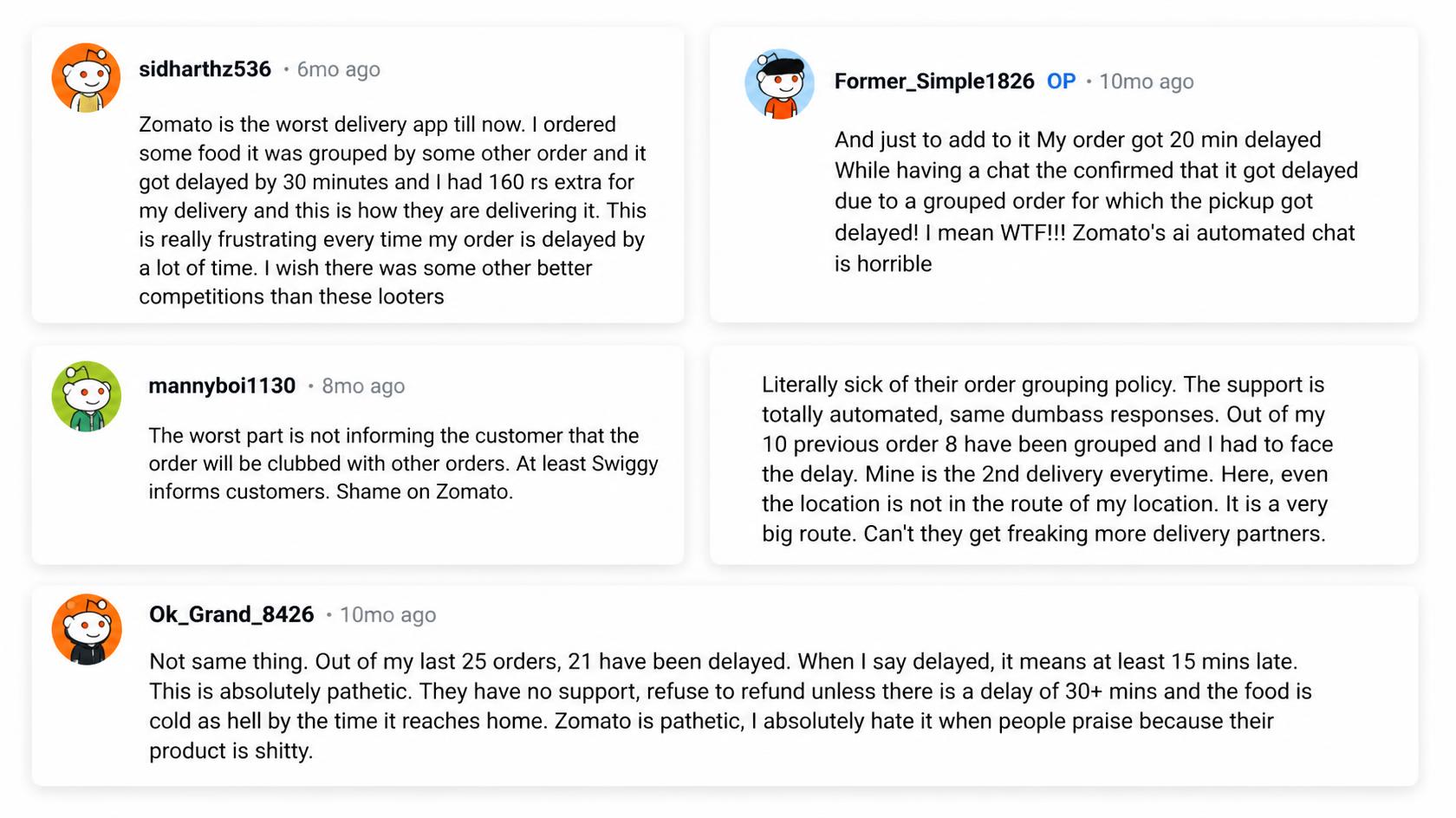
The friction isn't the delay, it's the opacity. Here’s real user feedback highlighting how hidden order batching converts operational efficiency into brand backlash.
Why it happens
Batching 15% to 20% of orders in a week is essential for Zomato’s logistics unit economics, but hiding the trade-off creates a severe transparency gap. This converts an operational efficiency model into a breach of customer trust (and eroding value for Gold subscribers).
Decision log
I reframed order batching from a backend logistics constraint into a front-end choice architecture.
1: The Checkout Moment
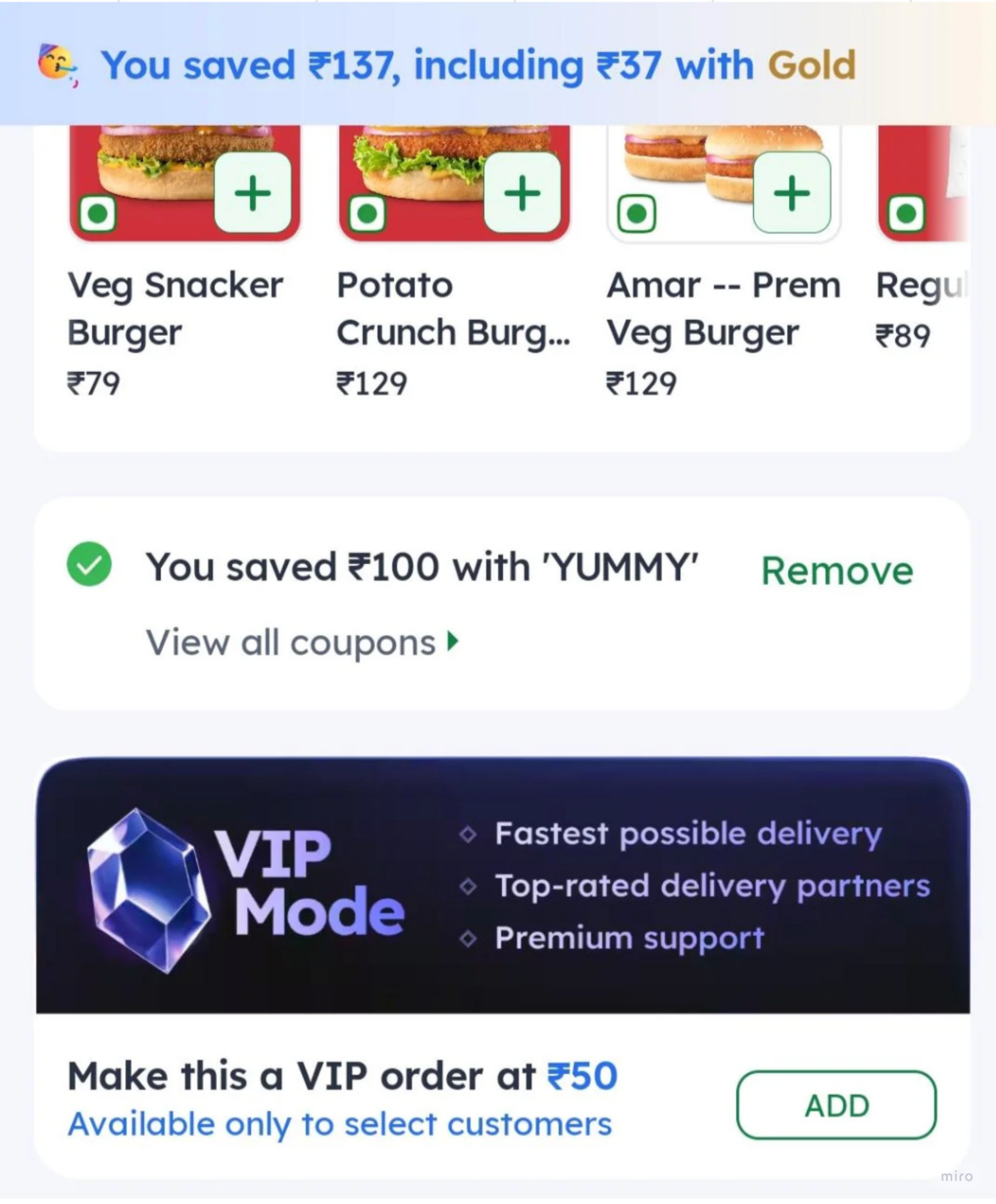
CURRENT (VIP Mode as premium upsell, batching hidden)
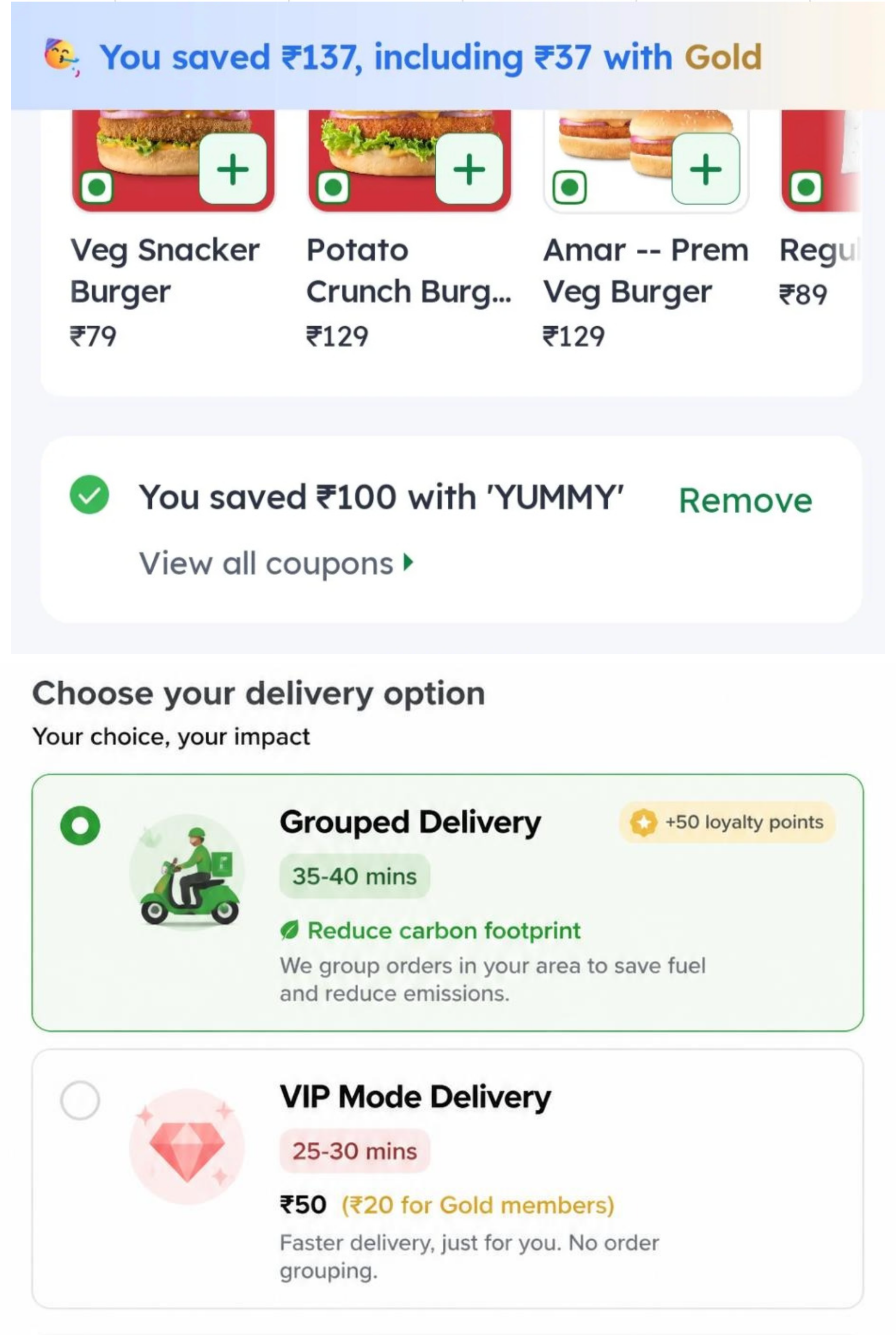
PROPOSED (Grouped Delivery as pre-selected, VIP Mode as opt-out)
For the user: A clear choice between saving 10 minutes or reducing emissions, framed with loyalty points instead of guilt.
For Zomato: Batching moves from a silent cost-saving trick to a rewarded user preference, protecting margin without eroding trust.
2: The Tracking Moment
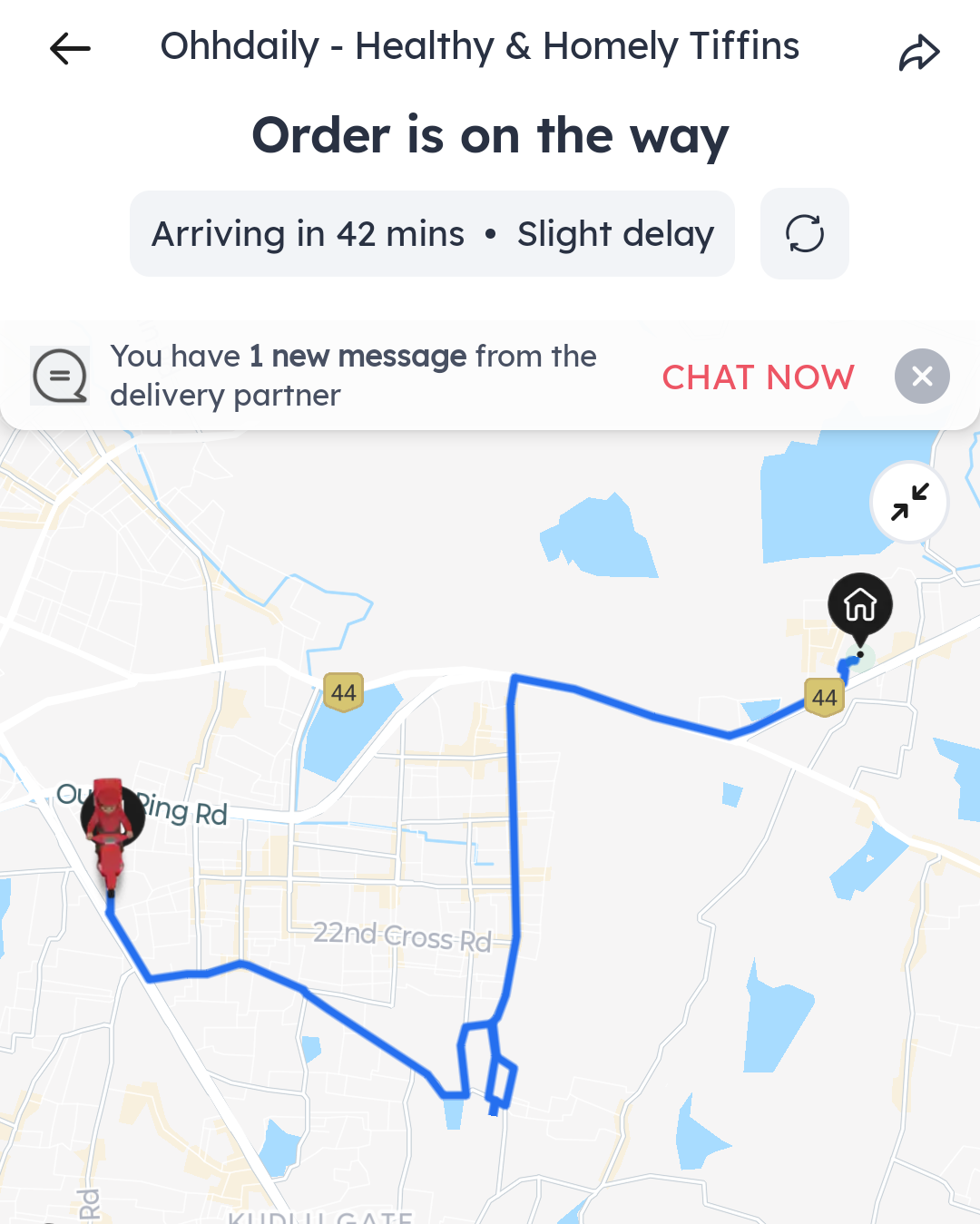
CURRENT (single-order route, no batching context, 'slight delay' with no explanation)
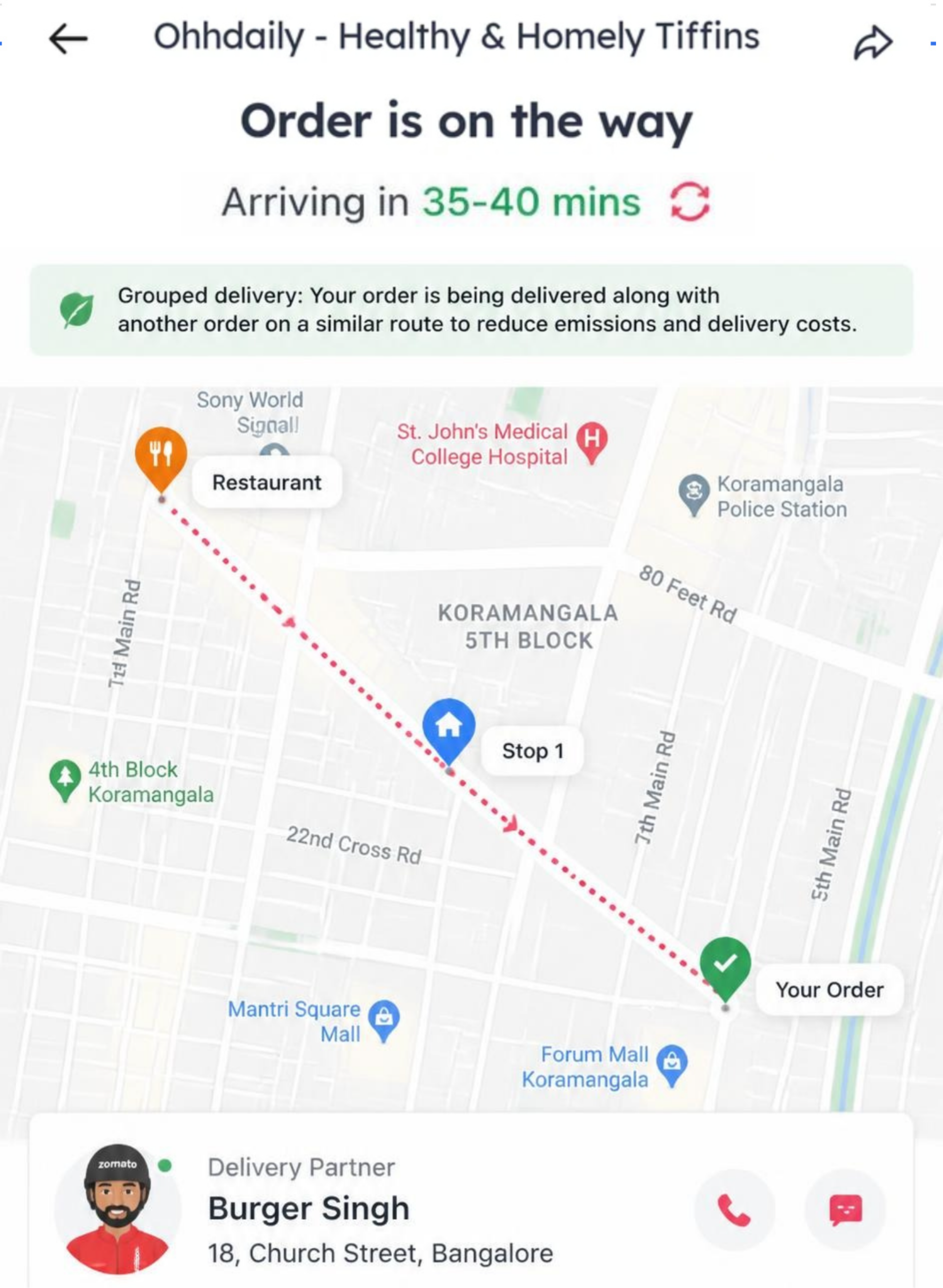
PROPOSED (grouped delivery banner + visible route tracking showing the stops)
For the user: The extra 10 minutes now has a reason, and the reason is one the user opted.
For Zomato: Delivery delays stop feeling like operational failure and start reading as promised behavior, cutting complaint volume on batched orders.
What I cut and why
I could have proposed eliminating grouped deliveries altogether or forcing all orders to be dedicated solo routes. I did not think that way because not all user frictions need a business logic change. In this scenario, destroying logistics economics is a non-starter for business viability. Instead of fighting supply chain reality I moved information upstream to the checkout screen, letting clear choice architecture monetize speed willingness-to-pay without abandoning batching.
Metrics
North star: Delivery CSAT (+15 to 20 pt)
Counter-metric: Grouped Order Acceptance Rate (guardrail: ≥80%) to ensure batching density remains intact
Support signal: Delivery tickets (-25%)
Business signal: VIP mode fee revenue (~₹8 to 10 Cr / month)
What I would do next
I would A/B test the loyalty reward threshold (+25 vs +50 points) and environmental microcopy on the default grouped tier to find the exact minimum incentive required. Success guardrail: grouped volume above 80% of baseline.
This case explored: